Editorial · A 2026 guide
How to read coffee tasting notes.
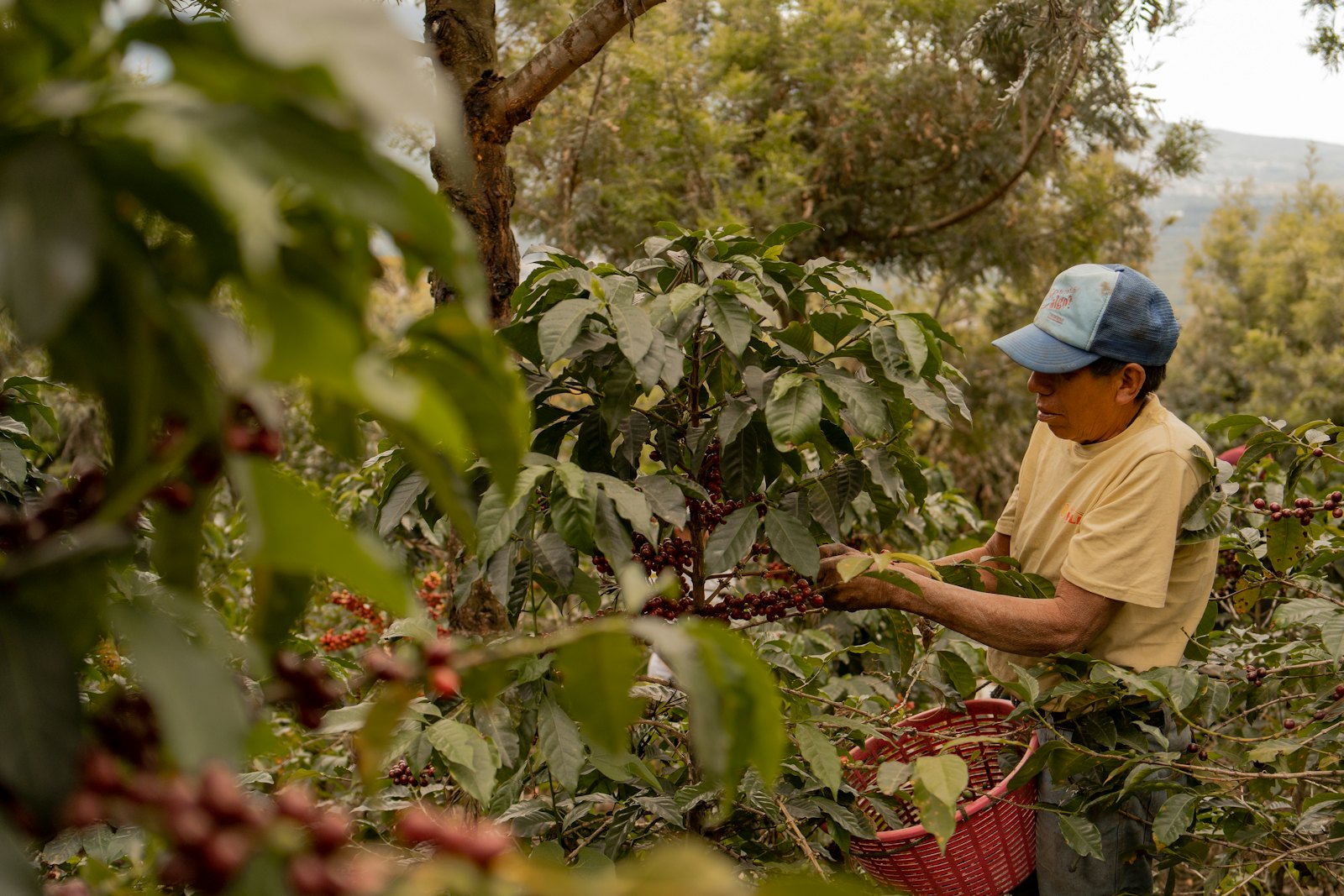 Hand-picked at origin
“Blueberry, brown sugar, jasmine.” The notes on a specialty coffee bag look like marketing copy until you realize they're a structured language with rules. Roasters write them in a shared vocabulary that, once you understand it, lets you predict the cup before you brew it.
Why tasting notes exist.
Coffee can express thousands of distinct flavor compounds — more than wine, by some counts. To make that legible, the specialty industry standardized on a shared vocabulary in the 1990s, most famously codified by the Specialty Coffee Association's Coffee Taster's Flavor Wheel. The wheel is hierarchical: it starts with broad categories (fruity, floral, sweet, nutty, spicy, sour, savory, roasted) and branches outward into progressively specific notes.
When a roaster writes “notes of blueberry, brown sugar, jasmine” on a bag, they aren't reaching for poetry — they've cupped this lot multiple times and those are the flavors that consistently came through. The notes are a compressed prediction of what most drinkers will taste, written in a vocabulary that means roughly the same thing across roasters worldwide.
The six families that cover most cups.
You don't need to memorize the full SCA wheel. Most coffee tasting notes fall into one of six broad families. Recognizing the family is more useful than identifying the specific note.
Fruit
By far the most common category in modern specialty. Subdivides into citrus (lemon, orange, grapefruit), berry (blueberry, raspberry, strawberry), stone fruit (peach, apricot, cherry), and tropical (mango, pineapple, passion fruit). Fruit notes typically come from natural or honey processing, or from high-grown washed Africans.
Sweet
Notes describing perceived sweetness without a fruit anchor. Caramel, honey, brown sugar, molasses, vanilla. These often appear on naturals and honey-processed coffees, and on darker roasts of any process — and they're the notes most reliably reproducible across drinkers.
Floral
Aromatic, light, often perfumed. Jasmine and bergamot are the giveaways for high-grade washed Ethiopians. Rose, hibiscus, and chamomile show up on washed Kenyans and some experimental lots. Floral notes are rare and a strong marker of a careful, well-processed lot.
Nut & chocolate
The default vocabulary for Classic-style coffees — washed Colombians, natural Brazils, balanced espresso blends. Almond, hazelnut, walnut. Cocoa, dark chocolate, milk chocolate. Reliable, familiar, easy to recognize. If a coffee's notes are entirely nut-and-chocolate, expect a comforting, balanced cup with no surprises.
Spice & savory
Less common but distinctive when present. Black pepper, clove, cardamom, cinnamon. Tobacco, cedar, leather. These often appear on Indonesian coffees (especially semi-washed) and on darker roasts. Some show up on experimentally processed lots where fermentation has pushed the cup into savory territory.
Fermented & funky
The hallmark of the experimental end of specialty. Wine notes (red wine, port), whiskey, brandy, tropical-juice ferments. These come almost exclusively from anaerobic and co-fermented processing. When done well they're spectacular; when done poorly they tip into solvent or vinegar.
Three rules for using notes when you're buying.
1. Trust families more than specifics. “Blueberry” is a hint that the coffee will taste sweet, fruity, and dark-berry-like. Whether you taste exact-blueberry is irrelevant — the family is what matters. Sweet/fruity/berry is a useful prediction; specific-blueberry is not a contract.
2. Read the first three notes, ignore the rest. Roasters list notes in rough order of dominance. The first three give you the shape of the cup. Notes 4 and 5 are usually qualifiers that won't change your decision.
3. Cross-check notes against process. A coffee with “jasmine, lemon, tea-like” should be a washed coffee. If the bag says natural, something is unusual — either a standout natural or unreliable notes. Learn the process families and the notes start cross-checking themselves.
How Cascara uses tasting notes
Notes as model input.
On Cascara, every bean is tagged with its tasting notes — both the roaster's and the ones our cupping picks up. Members rate beans they've brewed and the ratings update the palate model. Over time the algorithm learns which note clusters consistently land for you and which don't — even if you never type out a description yourself. You don't need vocabulary. You need consistency, which the model collects.
The output is a sharper match to your palate than a traditional menu of tasting notes can offer — and the calibration that gets this started takes less than a minute.
How to taste coffee yourself.
You don't need to develop a sommelier's vocabulary to get more out of specialty. The exercise that improves palate fastest:
Sip slowly. Hold the coffee in your mouth. Notice texture before flavor — is it light, juicy, syrupy, heavy? Then notice sweetness. Is the dominant sweet note caramel or fruit? Then notice acidity. Is it citrus, berry, tropical, or absent? Then notice the finish — what you're still tasting after you swallow.
Compare to the bag. Now read the notes. You won't hit every one. The point is to notice which words from the bag map to flavors you registered. Over time those associations become reflex.
Log every brew. Even just “liked / didn't like / would buy again” works. Cascara's model converges fastest with binary signal plus the bean's metadata.
Skip the vocabulary problem.
Less than a minute, eleven questions, and the model handles the translation between “what you actually like” and “what's on the bag.”
Start calibrating →Common questions.
Are coffee tasting notes accurate?
More than people give them credit for, but less than they suggest. A roaster writes notes after cupping the lot multiple times — they're a description of what most people taste, not a guarantee of what you'll taste. The note is a hint, not a contract. Trust the categories ('fruity, sweet, bright') more than the specifics ('blueberry pie').
What does 'fruity' mean on a coffee bag?
Generally that the coffee was processed in a way that pushes fruit-forward flavors — most often a natural or honey processing — and that the cupper picked up sweetness reminiscent of berries, stone fruit, or tropical fruit. 'Fruity' is broad. Specific notes like 'blueberry' or 'mango' tell you which direction within fruity.
What does the SCA flavor wheel show?
The SCA Coffee Taster's Flavor Wheel is a hierarchical map of every category of flavor that's been documented in specialty coffee. It starts broad (fruity, floral, nutty, sweet, sour) and branches into specific notes (citrus → orange, lemon, grapefruit). Roasters use it as a shared vocabulary so 'lemon' means the same thing across two different cuppers. As a drinker, it's most useful as a list of words to try when describing what you're tasting yourself.
Why do tasting notes vary between roasters for the same coffee?
Roast profile and cupping context. The same green coffee roasted lighter will surface different notes than the same green roasted darker. And every cupper has slightly different sensitivity — one will flag jasmine where another flags chamomile. Two reasonable people tasting the same cup can write reasonable but different notes.
Do I need to taste every note on the bag?
No. Tasting notes are not a checklist. If you sip a coffee with notes 'blueberry, brown sugar, jasmine' and you taste sweet, soft fruit, and a floral lift — you're tasting it correctly even if you couldn't identify any of those three on a blind sniff. The point of notes is to align expectations and help you predict cups you'll like, not to test you.
Read next.
Specialty coffee subscription in the Philippines
How the Cascara Subscription works — one matched bag, every month, delivered. Calibrate first so your first bag lands matched.
Specialty coffee gifts in Manila
A bag of specialty coffee is a good gift and a risky one. How to give coffee that fits someone's palate instead of guessing at it — what to check, and the gift that adapts.
Where to buy specialty coffee beans
Roaster-direct, cafe retail, Shopee and Lazada, or a subscription. What each channel costs you in freshness and information, and what to check before you buy on any of them.
The coffee palate quiz
A free coffee palate quiz. Eleven questions, one Cellar Identity, and a shortcut to coffee that fits your taste.
Author · Gil Erez, Founder of Cascara · 3 May 2026