
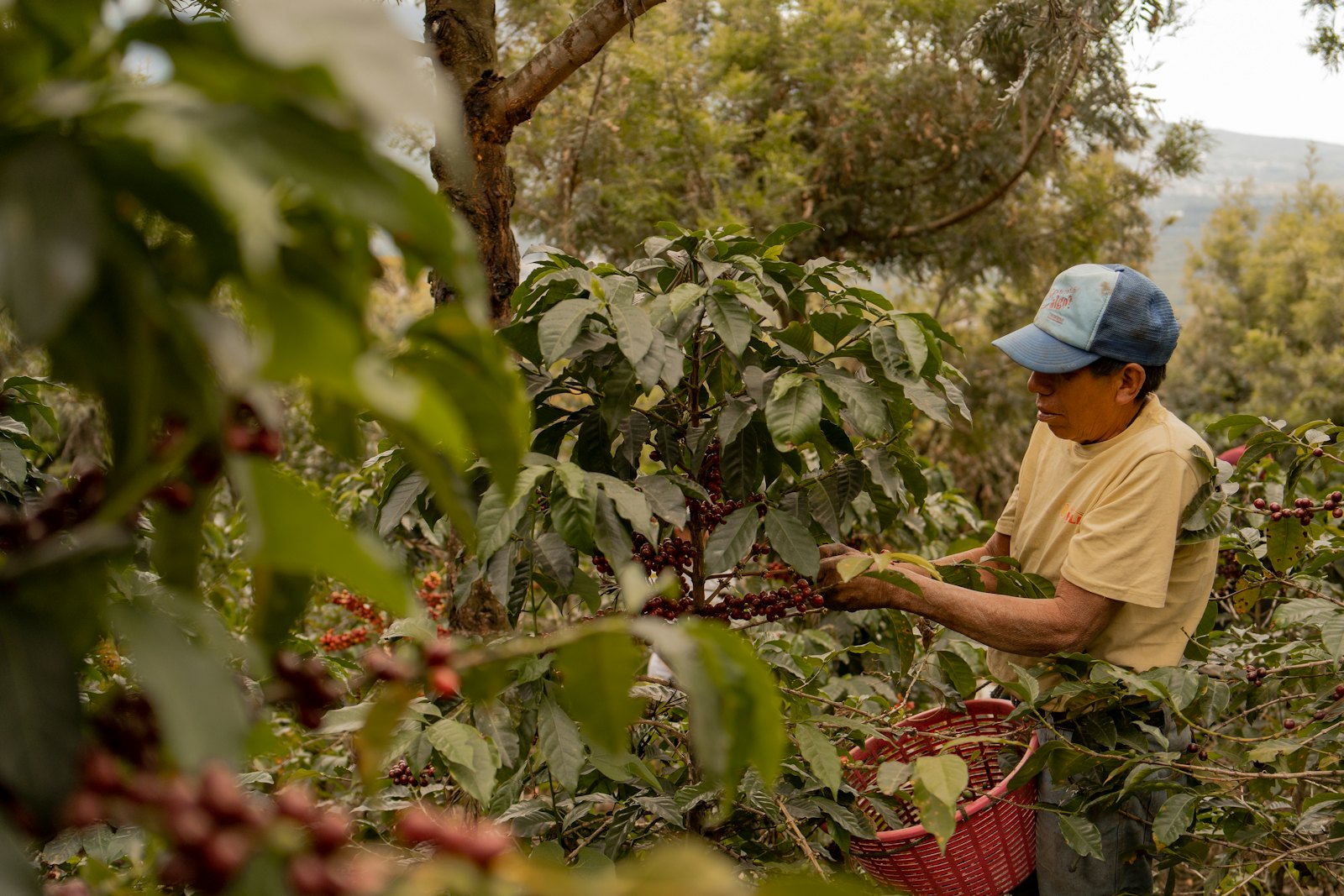
Ethiopia is where arabica started. Every coffee plant grown commercially anywhere in the world descends from Ethiopian heirloom genetics. The country's growing regions — Yirgacheffe, Sidamo, Guji, Limu, Harrar — each express that shared inheritance differently. This is a field guide to what you're actually drinking when you pick up an Ethiopian bag.
Why Ethiopia anchors specialty coffee.
Coffee was domesticated in the highlands of southern Ethiopia somewhere between 850 and 1500 CE. The plant spread from there to Yemen, then to Indonesia, then to the Americas, then to every other origin. All of it traces back. Today, Ethiopia still holds the deepest genetic pool of arabica anywhere in the world — thousands of distinct varieties grouped under the umbrella term heirloom on most specialty bags.
That genetic diversity is the country's superpower. The same washing station can process lots from twenty different heirloom subgroups, each contributing its own flavour to the cup. The result is the depth and aromatic complexity that Ethiopian coffees are known for — and that almost no other origin can match at the same price point.
The growing geography reinforces it. Most Ethiopian specialty coffee is grown above 1,500m, often above 2,000m. The high altitude slows the cherry's development, concentrating sugars and acidity in the bean. The soil is volcanic, the shade trees are mature, and most farms are tiny smallholdings where individual care is high.
The regions you'll see on a bag.
Yirgacheffe
1,750-2,200m
Floral, citric, tea-like. The benchmark for delicate washed coffees.
Yirgacheffe is a small zone within the larger Gedeo region of southern Ethiopia. The altitude is consistently high, the soils are volcanic and acidic, and the smallholder farms are dense — a single washing station can process cherries from hundreds of farmers.
Washed Yirgacheffes are the floor for what bright, clean Ethiopian coffee tastes like: bergamot, jasmine, lemon, white tea, sometimes peach skin. The acidity is high but never sour. The body is lighter than almost any other origin.
Naturals from Yirgacheffe push in the opposite direction — heavy blueberry, strawberry, sometimes wine-like funk. Both styles are widely available; both are worth tasting.
Sidamo
1,500-2,200m
Brighter than most, softer than Yirgacheffe. Berry-led naturals are the calling card.
Sidamo is the larger administrative region that surrounds Yirgacheffe. Coffees labelled simply “Sidamo” (without a more specific zone name) typically come from the broader region’s washing stations — slightly less elevation than Yirgacheffe’s core, but the same heirloom genetics and similar processing infrastructure.
Sidamo washed coffees lean toward stone fruit and milk chocolate where Yirgacheffe leans toward citrus and floral. Sidamo naturals are often the most accessible Ethiopian naturals on the shelf — sweet, fruit-forward, less wild than the most extreme Yirgacheffe lots.
If you’re new to Ethiopian coffee, a Sidamo natural is often a softer entry point than a Yirgacheffe natural while still showing what the origin is about.
Guji
1,800-2,300m
Stone fruit, complex floral, often more depth than Yirgacheffe. The connoisseur's pick.
Guji was administratively separated from Sidamo in the late 2000s and has since become a region competition lots and reserve menus chase first. Altitudes are even higher than Yirgacheffe in places, and many Guji washing stations are newer — built specifically for specialty quality.
A good Guji washed coffee tastes like Yirgacheffe’s structure with more dimension: peach, apricot, jasmine, bergamot, sometimes a chocolate underside that Yirgacheffe rarely has. Guji naturals can be the most complex Ethiopian naturals on the market — layered fruit, sweet structure, no funk.
Expect to pay a premium. Guji has been the buyer’s favourite Ethiopian zone for several seasons running.
Limu & Harrar
1,400-2,100m
Less common in specialty. Limu = balanced, winey washed. Harrar = wild dry-process.
Limu is a western Ethiopian region producing washed coffees with more body and less floral lift than Yirgacheffe — a quieter cup, often with red wine and spice notes. Less common in specialty rosters but worth picking up when a roaster has one.
Harrar is the eastern, dry-process tradition — sun-dried whole cherries with strong blueberry and wine notes. Quality is variable; a well-prepared Harrar is distinctive, but the average Harrar is rougher than a careful Yirgacheffe natural. Harrar lots are increasingly rare in the specialty market as Yirgacheffe and Guji absorb buyer attention.
Heirloom: the variety question.
Most coffee origins label their lots by named varieties — Bourbon, Typica, Geisha, Pacamara, SL28. Ethiopia mostly doesn't. The genetic diversity is too high to map individually, so specialty bags use the catch-all heirloom instead.
That ambiguity is part of the appeal. A Yirgacheffe washing station can be processing cherries from twenty distinct heirloom subgroups in a single lot, each contributing its own flavour layer. Some of these subgroups have started to be identified and named (Wolisho, Dega, Kurume), and the most specialty-focused Ethiopian washing stations are beginning to separate them. Over the next decade you'll see Ethiopian variety names move from the rare-lot menu to the standard specialty menu.
For now, “heirloom” on a bag is honest, not lazy. The roaster is telling you they're working with Ethiopian genetic diversity and not pretending to know which exact subgroup the lot came from.
How processing changes Ethiopian coffee.
The same Yirgacheffe heirloom processed two different ways tastes like two different coffees. Washed Yirgacheffe is the floral, citric, tea-like end of the Ethiopian spectrum. The same beans processed natural — sun-dried inside the cherry — come out heavy with blueberry, strawberry, sometimes wine.
This is why “Ethiopian coffee” as a category is almost meaningless without process information. Always read the process line on an Ethiopian bag before the region. A washed Sidamo and a natural Sidamo will diverge more than either will diverge from a Guji of the same processing. The processing-methods guide walks through the four families.
Currently in the cellar.
An Ethiopian lot in the catalog right now.

Find the Ethiopian coffee that fits your palate.
Cascara's palate algorithm matches you to one of four corners — Clean, Classic, Fluid, Experimental. Most washed Ethiopians live in Clean. Most naturals live between Classic and Experimental. Calibrate to find out which corner is yours.
Start calibrating →Common questions.
Why is Ethiopian coffee so highly regarded?
Ethiopia is the birthplace of arabica — every coffee plant grown commercially anywhere in the world traces back to Ethiopian heirloom genetics. The country has thousands of indigenous varieties (the local term is 'heirloom' — there are too many to map individually), high altitudes across most growing regions, and centuries of cultural infrastructure around coffee. Whether any single origin tops your list depends on your palate; what's not arguable is that Ethiopia anchors specialty coffee the way Burgundy anchors wine.
What is the difference between Yirgacheffe and Sidamo?
Yirgacheffe is a small, high-altitude zone inside the larger Sidamo region. A coffee labelled 'Yirgacheffe' is from a specific subset of washing stations within a single zone; a coffee labelled 'Sidamo' (without a sub-region) is from the broader area. Yirgacheffes tend to be more delicate and floral; Sidamos tend to be slightly fuller-bodied, often more fruit-led. Both share the same heirloom variety pool.
What does 'heirloom variety' mean on an Ethiopian coffee?
It means the coffee comes from one of thousands of indigenous arabica varieties native to Ethiopia, rather than the named commercial varieties (Bourbon, Typica, Geisha, etc.) that dominate other origins. Roasters use 'heirloom' as a catch-all because the genetic diversity is too high to label every lot precisely. Ongoing research projects in Ethiopia are starting to identify and name specific heirloom subgroups, but for now most bags will just say 'heirloom'.
Should I buy washed or natural Ethiopian coffee?
Both, in different bags. Washed Ethiopian coffee shows you what the origin tastes like at its cleanest — citrus, jasmine, tea, the lot's geology pushed forward. Natural Ethiopian coffee shows you the same beans expressing through the cherry's sweetness — heavy berry, strawberry jam, sometimes wine-like notes. They taste so different you wouldn't guess they came from the same farm. The right answer is to keep one of each in rotation.
Why is Ethiopian coffee more expensive than other origins?
A few reasons. Specialty-grade Ethiopian production is small — most Ethiopian coffee that reaches the global market is commodity grade, and only a thin top slice qualifies as specialty. The country's pricing system (Ethiopian Commodity Exchange, plus newer direct-trade carve-outs) is complex. And demand is high — Ethiopia is the most-requested origin on most specialty roaster menus. The premium reflects scarcity, not just quality.
Read next.
Kenyan coffee, explained
The loudest cup in coffee. What SL28 and SL34 are, what 'AA' really means, the double-washed process, and why Kenya tastes of blackcurrant and wine.
Colombian coffee, explained
The balanced benchmark. The regions, Castillo and Caturra, the FNC, and why two harvests keep Colombian coffee fresh almost all year round.
Yemeni coffee, explained
Where coffee began. The port of Mokha, heirloom landraces, the highest farms in coffee, and a wild dried-fruit cup found nowhere else.
Panama Geisha, explained
The Ethiopian variety that made Panama famous and broke every green-coffee price record. What Geisha tastes like, washed vs natural, why Boquete, and why it costs what it does.