
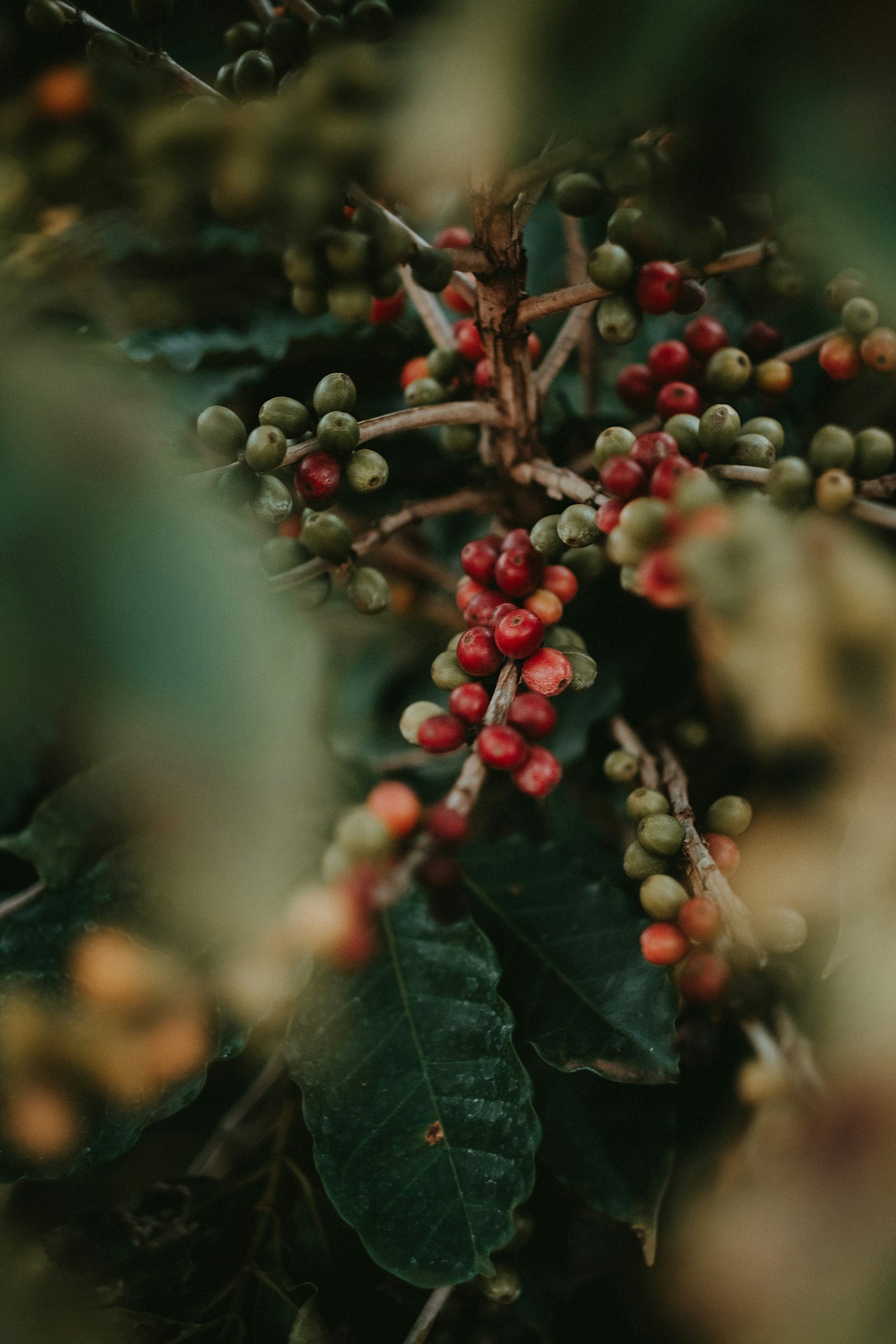
How a coffee is roasted decides how the bean travels from green to cup. Roast level, development time, and roast date are three variables you can read off most specialty bags — and once you can, you'll predict cups before you brew them.
What roasting actually does.
Green coffee is hard, grassy, and tastes like nothing you'd recognise. Roasting is the process of applying heat for 8-15 minutes to drive moisture out of the bean and trigger two waves of chemical reactions: Maillard browning (the same reaction that happens to bread crust) and caramelisation of natural sugars. Both produce hundreds of aromatic compounds that didn't exist in the green bean.
The roaster's job is timing. Pull the beans too early and they taste underdeveloped — grassy, sour, papery. Push too far and the bean's structure breaks down, oils migrate to the surface, and the cup tastes of the roast process itself rather than the lot. The window between those two failure modes is where roast levels live.
Two audible markers anchor the timeline. First crack happens around 196°C (385°F) when the bean's internal moisture flashes to steam and pops the structure open. This is the earliest a coffee can be considered “done.” Second crack happens around 224°C (435°F) when cellulose breaks down and oils start escaping the bean. This is the latest most specialty roasters will ever go.
The four roast levels, in order.
Light
Pulled at or shortly after first crack
- Appearance
- Cinnamon-brown. Surface fully dry. Roast date crucial — flavour fades fast.
- Taste
- High acidity, light body. Origin character forward — citrus, jasmine, tea, stone fruit. The bean's geology shows through.
- Best use
- Pour-over, V60, AeroPress. Most modern specialty roasters default here — it's the level that lets a single-origin lot speak for itself.
Medium-light
Past first crack, pulled before significant caramelisation
- Appearance
- Light brown. Surface still dry. Often described as 'city' roast.
- Taste
- Balanced acidity and sweetness. Origin still clearly legible but with more body. Caramel and milk chocolate notes emerging.
- Best use
- Pour-over, batch brew, AeroPress. The most versatile roast level — works for the widest range of brewing methods.
Medium
Well past first crack, approaching second
- Appearance
- Medium-brown. Surface mostly dry, slight sheen possible. 'Full city' roast in older terminology.
- Taste
- Lower acidity, fuller body. Origin softened. Sweetness from caramelised sugars dominates. Common notes: chocolate, nuts, dried fruit.
- Best use
- Espresso, milk drinks, batch brew. Popular with cafes serving milk-based drinks because the chocolate/nut notes survive milk dilution.
Dark
Into or past second crack
- Appearance
- Dark brown to nearly black. Oily surface — bean structure has broken open and oils have migrated out.
- Taste
- Acidity stripped, body heavy. The roast itself is the dominant flavour: toast, dark chocolate, bitterness, sometimes ash. Origin character lost.
- Best use
- Traditional Italian espresso, blends optimised for milk masking, drinkers who want a 'strong' or 'bold' cup. Rare in specialty single-origin work.
Development time — the variable nobody prints on the bag.
Roast level tells you when the roaster pulled the beans. Development time tells you how long they spent at the caramelisation phase before pulling. Two coffees pulled at the same final temperature can taste completely different if one spent 90 seconds developing and the other spent 180.
Short development produces brighter, more acidic cups but risks underdeveloped notes — grassy, sharp, sometimes hollow on the palate. Long development sweetens and rounds the cup but pushes origin character into the background. Most specialty roasters target 15-25% of total roast time as development; below 12% tends to taste underdeveloped, above 30% tends to mute the lot.
You won't see development time on a bag. You'll taste it. A coffee that smells rich dry but tastes flat in the cup is often underdeveloped. A coffee that's heavily sweet but where you can't pick up the origin notes the bag promises is often over-developed.
The variable that beats every other variable
Roast date.
The single most important number on a specialty coffee bag is the roast date. A four-day-old bean and a four-week-old bean of the same lot taste like two different coffees. The four-day bean is still degassing — the cup will be muted and sometimes grassy. The four-week bean has lost most of its volatile aromatics — the cup will be flat regardless of how well you brew.
The window where a coffee is at its best:
- Filter7-21 days post-roast. Most pour-over coffees peak in week two.
- Espresso10-30 days post-roast. Pressure tolerates more residual CO2 than gravity-fed methods.
If a bag has no roast date printed, it's either supermarket coffee (probably 6-12 months old) or a roaster cutting a corner you should care about. Specialty roasters print the date because they know it matters.
How to use this when you're buying.
Check the roast date before anything else. If it's more than three weeks old, put it down. It doesn't matter how well-rated the roaster is — stale coffee tastes stale.
Match roast level to brewing method. Light-to-medium for pour-over and filter. Medium for espresso when you want origin character. Medium-to-dark for milk-based drinks where you need flavour to survive dilution.
Buy smaller bags more often. A 250g bag you'll finish in two weeks beats a 500g bag you'll finish in five. Specialty coffee is not a pantry staple — it's closer to fresh produce.
Trust the roaster's default level for each lot. If a roaster pulls a Yirgacheffe light and a Brazil medium, they're telling you what each bean wants. Override them only after you've had the roaster's version first.
Find the roast level that fits your palate.
Less than a minute, eleven questions. Your kite tells you whether you lean toward bright light roasts, balanced mediums, or the heavier end of the roast curve.
Start calibrating →Common questions.
How far into the roast is a light roast pulled?
A light roast is a coffee pulled from the roaster shortly after first crack — the moment the beans audibly pop and release moisture. The bean is fully cooked but the sugars haven't caramelised much. Result: high acidity, lighter body, origin character pushed forward. Most specialty roasters favour light-to-medium roasts because they preserve the lot's distinctive notes.
How far into the roast is a medium roast pulled?
A medium roast is roasted past first crack but pulled before second. The bean is darker brown, sugars have caramelised, and the surface stays dry (no oil). Acidity drops, body increases, and the cup tastes more balanced — the origin is still legible but softened. This is the most forgiving roast for milk-based drinks.
How far into the roast is a dark roast pulled?
A dark roast is roasted into or past second crack, when the bean structure breaks down and oils migrate to the surface. The cup tastes of the roast itself — toast, dark chocolate, bitterness — more than the underlying bean. Most commercial blends are dark roasts because dark roasting masks lot-to-lot variation. Specialty roasters dark-roast rarely.
What is development time in coffee roasting?
Development time is the minutes a roaster spends between first crack and pulling the bean from the drum. Short development (under 1:30) tends to produce bright, acidic, sometimes grassy cups. Long development (over 2:30) produces sweeter, fuller-bodied cups but risks losing origin clarity. Most specialty roasters target 15-25% of total roast time as development.
How long after roasting is coffee at its best?
For pour-over and filter, 7-21 days post-roast is the window most roasters target. Fresh-out-of-the-roaster beans (1-3 days) often taste flat or grassy because they're still degassing CO2. Beans 30+ days post-roast lose aromatic compounds and start to taste stale, even sealed. Espresso runs slightly later — 10-30 days, because the higher pressure tolerates more degas.
Should I keep coffee in the fridge or freezer?
Fridge no — moisture and odours move into the bag every time you open it. Freezer yes, if the bag is sealed and you take it out only at brew time. For most home drinkers, the simpler answer is to buy smaller bags more often. A 250g bag finished in two weeks beats a 500g bag finished in five.
Read next.
Light roast vs dark roast
What roast level actually changes in the cup, how light and dark really taste, the caffeine myth, and how to pick the roast that fits the way you drink your coffee.
Coffee acidity, explained
The most misunderstood word in specialty coffee. Why bright isn't sour, where acidity comes from, and how to brew for more of it — or less.
The coffee flavor wheel, explained
The map behind every tasting note. What the SCA wheel is, the nine flavor families at its center, and the inside-out method most people get wrong.
Yuzu, bergamot and citrus in coffee
Yuzu is turning up on coffee bags everywhere. What citrus tasting notes mean, whether there's really yuzu in the cup, and how to taste the bright end of specialty coffee on purpose.